Blog
The role of silence in outdoor bathing spaces

Silence plays a defining role in how outdoor bathing is felt and remembered. It is not an absence, but a condition shaped by space, materials, and distance from constant stimulation. In a well designed outdoor bathing environment, silence allows attention to settle, giving water, breath, and movement the space to be perceived without interference. This quiet does not happen by chance. It emerges from deliberate choices that reduce noise and support presence.
Outdoor bathing offers a setting where silence becomes part of the experience rather than a backdrop. Away from enclosed interiors and mechanical sound, the bathing space reconnects the body to subtler sensations. The ritual slows because fewer elements compete for attention. Silence becomes a framework that supports immersion rather than a goal in itself.
Silence as a condition for presence
Silence shapes how the body enters the water and how awareness unfolds during immersion. When sound recedes, attention shifts inward without effort. The experience becomes less directive and more receptive, allowing the ritual to settle into its own rhythm.
Reducing sensory load
Outdoor bathing spaces limit unnecessary stimuli. There are no screens, alerts, or artificial soundtracks. The reduction of sensory input allows the nervous system to soften naturally. Breath slows. Movement becomes measured. Water contact gains clarity. This reduction supports presence without instruction, allowing silence to guide the experience quietly.
Letting subtle sounds remain
Silence does not remove sound entirely. It allows subtle elements to remain audible. Water movement, wind through trees, distant natural activity. These sounds do not demand attention. They anchor the body in place. The experience feels grounded because sound remains contextual rather than dominant.

Distance from noise as a design choice
Silence in outdoor bathing spaces often begins with location. Distance from traffic, dense circulation, and constant activity reduces background noise before the ritual starts. This separation prepares the body for immersion long before contact with water.
Placement within the landscape
Thoughtful placement allows bathing spaces to benefit from natural sound buffers. Trees, terrain, and open space absorb and soften noise. The bathing environment feels held by its surroundings rather than exposed to constant interruption. This positioning supports continuity of experience, where silence remains consistent throughout immersion.
Orientation and enclosure
Partial enclosure without full isolation shapes how sound behaves within the space. Low walls, vegetation, and subtle boundaries reduce echo while maintaining openness. Sound disperses rather than accumulates. This balance preserves silence while allowing air, light, and temperature to remain present.
Materials that absorb rather than amplify
Material selection plays a quiet but decisive role in shaping silence. Hard, reflective surfaces amplify sound. Softer, textured materials absorb it. Outdoor bathing environments rely on this principle to maintain calm.
Wood as a sound moderator
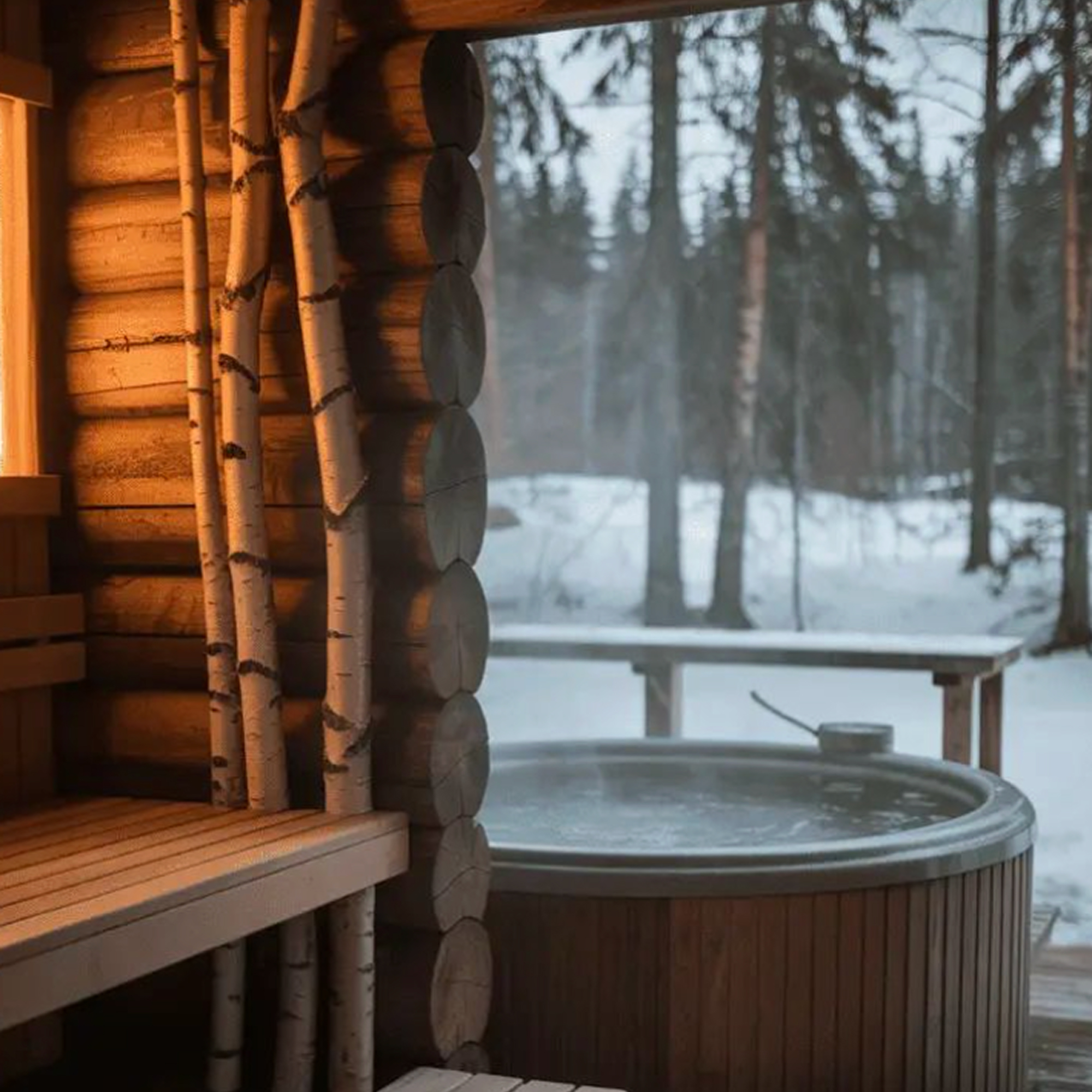
Thermally modified wood dampens sound naturally. Footsteps soften. Water movement feels contained rather than sharp. Wood supports silence by reducing reflection and creating a sense of warmth that extends beyond temperature. The material contributes to quiet through its physical properties as much as its appearance.
Water as a stabilizing element
Water itself absorbs sound. When circulation remains balanced and steady, movement stays quiet. The surface remains calm. This stability reinforces silence by preventing sudden noise that could break immersion. Sound and stillness remain in balance.

Silence shaping the rhythm of the ritual
When silence frames the bathing experience, time feels different. Without constant sound cues, immersion unfolds at its own pace. Entry and exit respond to sensation rather than instruction.
Time perceived through sensation
Silence removes external markers of time. There is no signal to move faster or slow down. The body leads. Breath, warmth, and comfort guide duration. This perception of time supports longer moments of stillness or shorter immersions without pressure. The ritual adapts naturally.
Shared silence and collective presence
In communal bathing spaces, silence supports connection without conversation. Shared quiet allows presence without performance. People remain together without the need to fill space with words. This collective silence reinforces trust and ease, shaping a social experience grounded in calm rather than interaction.
Silence as a result of intentional design
Silence in outdoor bathing spaces does not happen by default. It results from intentional decisions about placement, materials, circulation, and spatial boundaries. Each element contributes to reducing noise and supporting awareness.
By designing environments that limit stimulation and preserve subtle sound, outdoor bathing spaces allow silence to become part of the ritual. This quiet supports immersion that feels grounded, stable, and attentive. The experience extends beyond form or function, shaping how the body settles and how presence unfolds over time.
Explore the Nordsprings bathing environments designed to support immersion through balance, material integrity, and intentional quiet.